



A practical guide to planning and carrying out premises inspections - covering what to check, how often, what forms to use and the legal context.

A practical guide to managing vehicles used at work - covering pre-use checks, maintenance, driver competence, legal requirements and ISO compliance.
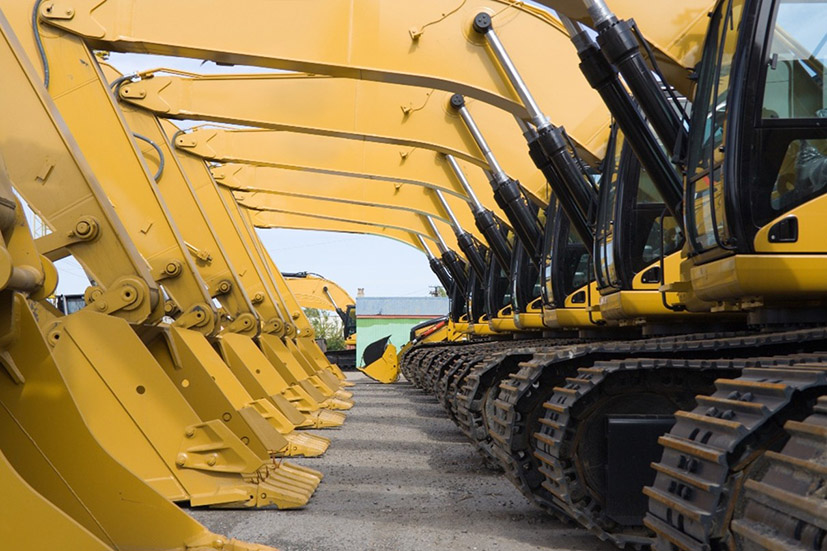
A practical guide to managing work equipment safely and in compliance with PUWER 1998 and ISO standards - covering inspection, maintenance, operator competence and record-keeping.
This section of the Knowledge Base covers managing equipment and premises - the physical assets, work equipment, vehicles, buildings and infrastructure your organisation relies on. It is UK-focused but written to be useful to readers elsewhere who can apply the same principles under their own local legislation.
The articles cover work equipment, lifting equipment, electrical safety, fire safety, premises management, vehicle fleets, machinery and the supporting registers and inspection regimes that keep them safe. Each article picks a specific topic, explains the principles, gives practical advice on what to put in place, and points to the alphaZ documents that support that part of the management system.
Equipment and premises sit at the centre of most workplace risk. The Health and Safety at Work etc. Act 1974 and a stack of more specific regulations - PUWER, LOLER, the Electricity at Work Regulations, the Workplace (Health, Safety and Welfare) Regulations, the Regulatory Reform (Fire Safety) Order - all turn on the proper management of physical things. The same controls keep equipment running reliably, reduce the cost of breakdowns, support insurance positions and demonstrate due diligence to customers and auditors.
For ISO management systems, equipment and premises are the operational backbone. ISO 9001 looks at the suitability and maintenance of the resources used to deliver the product or service. ISO 14001 covers the environmental aspects of equipment use - emissions, waste, resource consumption as well as equipment for emergency preparedness. ISO 45001 covers the safety of the people who use it. The same equipment register, the same inspection regime and the same competence records can serve all three.
Most enforcement action I see reported tends to relate to one of three things - poor inspection regimes for lifting and pressure equipment, electrical safety not being kept up to date, or fire safety arrangements that have not been reviewed since the building was occupied. None of them require huge investment to fix. They require a register, a schedule, and someone whose job it is to make sure the work actually happens.
Several pieces of UK legislation apply directly to equipment and premises. The Provision and Use of Work Equipment Regulations 1998 (PUWER) covers all work equipment and requires it to be suitable, maintained and inspected. The Lifting Operations and Lifting Equipment Regulations 1998 (LOLER) add specific requirements for lifting equipment including thorough examination at defined intervals. The Electricity at Work Regulations 1989 require electrical systems to be constructed and maintained to prevent danger.
For premises, the Workplace (Health, Safety and Welfare) Regulations 1992 set the baseline for working environments. The Regulatory Reform (Fire Safety) Order 2005 requires a fire risk assessment and appropriate fire safety arrangements. The Control of Asbestos Regulations 2012 apply to most non-domestic buildings constructed before 2000. Specialised equipment may bring further regulations - pressure systems, gas safety, refrigeration, compressed gases.
Articles in our Health and Safety and Legal and Compliance sections cover these obligations from the legal angle; this section focuses on the controls that put them into practice through the equipment and premises management system.
ISO 9001 requires that the infrastructure and environment used for operations are suitable, maintained and supported. ISO 14001 covers the environmental aspects of equipment and premises - energy use, water, waste, emissions, materials. ISO 45001 covers the safety of the workplace and equipment. The integration of these standards in IMS1 shares the underlying registers, inspection regimes and procedures rather than duplicating them.
For an audit, the equipment register is usually the first thing I ask to see. Is it complete, is it up to date, does it identify the equipment that needs statutory inspection, and are those inspections actually being done? The same register supports ISO 9001, ISO 14001 and ISO 45001, so getting it right pays off across the whole management system. The most common gap is equipment that has been added or moved without the register being updated - typically the things bought through individual budget holders rather than through procurement.
For organisations new to equipment and premises management, the practical starting point is the equipment register. Identify what you own, what you lease, where it is, who uses it, and which items need statutory inspection. From the register, the inspection schedule, maintenance regime and training requirements all follow.
The articles in this section walk through each of the main equipment and premises topics, the controls that work in practice, and the alphaZ documents that support each one.
We rebuilt our equipment register two years ago and found about a fifth of the items had not been inspected for over a year, mostly because responsibility had drifted between teams as people changed roles. Keeping this register up to date keeps us right - I can glance at the register and see what inspections or calibrations are coming up.