


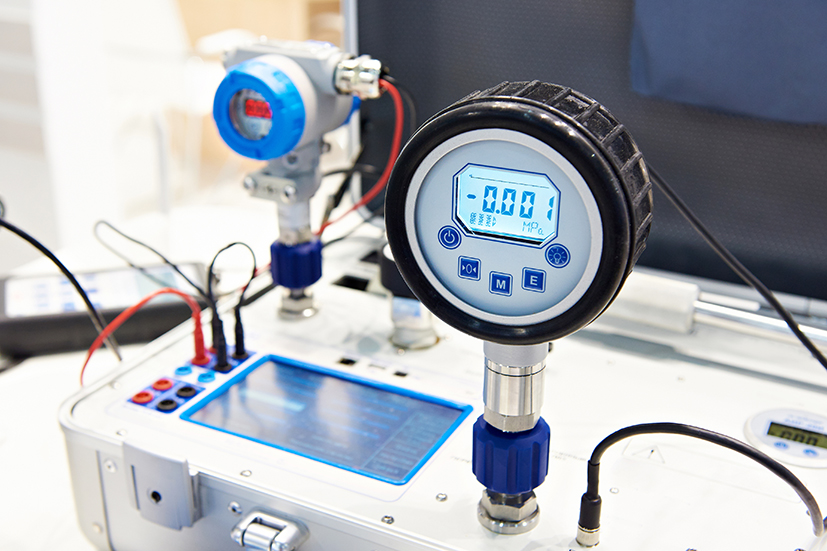
Measuring Equipment Calibration and Verification in the Workplace
Measuring Equipment in Brief
- Identify equipment used for measurements that affect product or service conformity
- Calibrate or verify it against traceable standards at planned intervals
- Protect, identify and record its calibration status
Management of Measuring Equipment and Calibration
Measuring equipment is any equipment used to obtain measurements that influence decisions about product or service quality, safety or compliance. This includes equipment such as weighing scales, thermometers, calipers, gauges, multimeters, torque wrenches and pressure gauges - anything where an inaccurate reading could result in a defective output or a safety risk.
Not all measuring equipment requires formal calibration. A tape measure used for general layout work carries different risk from a set of precision calipers used to verify component dimensions, or a pressure gauge on safety-critical plant. The starting point is to identify which measuring equipment, if found to be inaccurate, could lead to a problem - and to manage those items accordingly.
Calibration - What It Means in Practice
Calibration is the process of checking a measuring instrument against a known reference standard and confirming it is reading within acceptable limits. Where it is not, the instrument is adjusted, repaired or taken out of service. The result of a calibration should be documented.
Calibration can be carried out internally where suitable reference standards are available and the person carrying out the calibration is competent to do so, or externally by an accredited calibration laboratory. Where calibration is carried out against national or international measurement standards, this provides traceability - a documented chain linking the measurement back to a recognised standard.
Where no traceable calibration standard exists for a particular measurement - which can occur with some specialised or in-house measurements - the basis used for calibration or verification should itself be documented.
The status of calibrated equipment should be clear. Labelling each item with the date of last calibration and the date the next calibration is due makes status immediately visible to users and makes it straightforward to manage renewal dates.
Measuring Equipment Management and ISO 9001
ISO 9001:2015 Clause 7.1.5 requires organisations to determine what monitoring and measuring resources are needed to demonstrate product or service conformity, and to keep those resources fit for purpose. Where formal calibration is needed, equipment must be calibrated at planned intervals or prior to use against traceable standards, identified to show its calibration status, and protected from damage or adjustment that would invalidate calibration results.
If measuring equipment is found to be out of calibration, the organisation should consider whether any previous measurements taken with that equipment may have been affected, and take appropriate action. Records of calibration and verification must be retained as documented information.
It is worth being clear that ISO 9001 does not require every piece of measuring equipment in an organisation to be formally calibrated - only equipment where calibration is necessary to provide confidence in results. The risk-based assessment of which equipment falls into that category is for the organisation to make.
Calibrated equipment is a popular hunting ground for auditors! It's really important to make sure everything used for measuring is marked in some way. If it doesn't need calibrated add a sticker or mark to designate it as 'reference only'. If it needs calibrated make sure its got a sticker or mark confirming status or number all equipment so it can be linked back to the register to confirm it has been calibrated. Quarantine anything that should be calibrated but isn't!!
Under ISO 9001:2015 Clause 7.1.5, the requirement is specifically about measuring resources used to verify conformity of outputs - not every measuring instrument in the building. The question to ask is whether an inaccurate reading from this equipment could result in a nonconforming product or service reaching a customer. If yes, it needs to be managed. If the answer is genuinely no, it probably does not. Where calibration records are maintained externally - by a supplier or testing laboratory - those records are still valid evidence. You just need to have them available.
When I audit against ISO 9001 Clause 7.1.5, I am looking for three things: a list of which measuring equipment is in scope, evidence that calibration or verification has been carried out at the required intervals, and records showing the results. The calibration certificate from an accredited laboratory is clear and easy to assess. Where calibration is done internally I want to see what standard it was checked against and who carried it out.
Practical Compliance Guidance
To effectively log and ensure that all equipment required to be calibrated is tracked - you can set-up a calibration register which lists the item no, description, location, calibration period, tolerance, date last tested, checked by, date checked, pass status and general notes and comments.
If you have equipment that is calibrated internally (by the company) and externally, you can set-up two different registers for this or just use the ER4 Equipment Register and detail who completes the calibration.
Ensure you receive and retain calibration records from external providers, a filing system with a folder for each item of equipment can keep everything organised, and if completing own calibration in-house ensure this is documented and retained. Also ensure your equipment for completing calibration is calibrated!
Section 3.2 of the IMS1 Manual covers equipment management and should reflect the arrangements in place for measuring equipment and calibration.
The documents below support a compliant approach to managing measuring equipment and meeting the requirements of ISO 9001 Clause 7.1.5.
| alphaZ document | How to use it |
|---|---|
| ISO 9001 Management System Toolkit | The complete toolkit for implementing an ISO 9001-compliant quality management system. Includes the IMS1 manual, all policies, procedures, registers and audit checklists. |
| F-Q110 Calibration Register | Use to log all equipment that requires calibration, with notes and dates added. Separate internal and external registers available for internally/externally calibrated equipment. |
| ER4 Equipment Register | Use to log all measuring equipment in scope - including calibration due dates and calibration status. Keeps the full picture of equipment management in one place. |
| F-Q34 Equipment Visual Inspection Record | Use for recording visual checks and condition assessments of measuring equipment alongside other plant and equipment. |
| GG-1-06 Management of Equipment and Premises | Guidance document covering equipment and premises management. Includes guidance on managing measuring equipment and calibration requirements. |
Note - all the above files can be downloaded with an alphaZ subscription.
Frequently Asked Questions
UK Legislation
There is no specific UK legislation mandating the calibration of measuring equipment in general. The requirement for organisations pursuing ISO 9001 certification arises from the standard itself. Certain sectors and applications have specific calibration requirements under sector-specific legislation or regulation - for example, weighing equipment used for trade purposes is subject to weights and measures legislation. Organisations should identify any sector-specific requirements applicable to their activities.
- Provision and Use of Work Equipment Regulations (PUWER) 1998
- Weights and Measures Act 1985 - applies to weighing and measuring equipment used for trade purposes
