


Compressed Air Equipment Safety and Inspection
Compressed Air Safety in Brief
Compressed air systems are pressure systems under PSSR 2000 and need a written scheme of examination from a competent person, plus the inspections that scheme calls for. Common faults like worn hoses and leaking fittings need fixing before they fail under pressure.
Management of Compressed Air Equipment
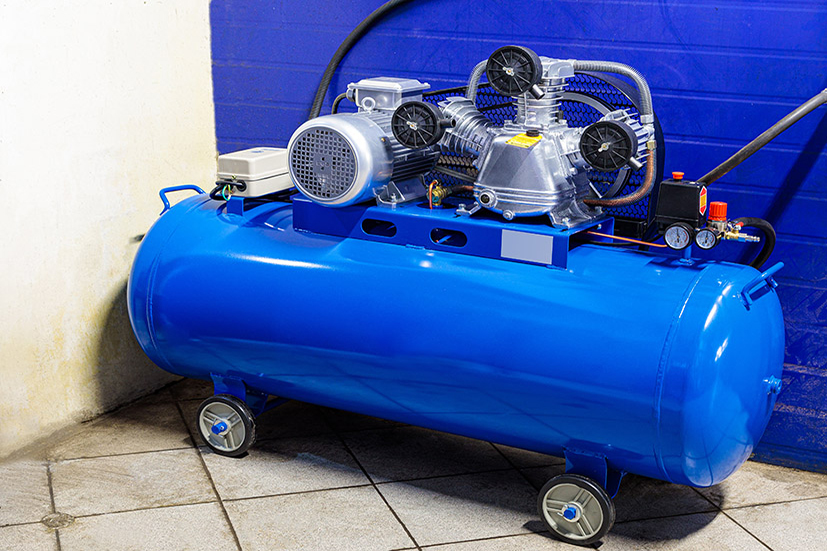
Compressed air equipment is equipment which forms part of a pressure system - including compressors, air receivers and the pipework connecting them.
If you are in the UK, the use of compressed air equipment/pressure equipment is subject to the Provision and Use of Work Equipment Regulations (PUWER) 1998 and the Pressure Systems Safety Regulations (PSSR) 2000.
PSSR sets specific requirements for the design, installation, maintenance and examination of pressure systems that go beyond the general work equipment duties under PUWER.
Compressed air is widely used across manufacturing, construction, automotive, engineering and many other sectors. The applications are broad - powering pneumatic tools, spray equipment, cleaning, inflation and a range of automated processes. The hazards, however, are specific and warrant careful assessment.
Hazards Associated with Compressed Air Equipment
Air injection injuries - direct contact between a compressed air outlet and skin can force air into the body, causing serious internal injuries and in some cases death. This is one of the most severe hazards associated with compressed air and is the reason why using compressed air to clean clothing or skin must never be permitted.
Flying particles - compressed air used for cleaning or blowing off surfaces can project particles, swarf or debris at high velocity, causing eye and facial injuries. Eye protection is required when working with compressed air in situations where this risk exists.
Noise - compressed air equipment and pneumatic tools generate significant noise levels. Where exposure exceeds the action levels set by the Control of Noise at Work Regulations 2005, hearing protection is required and noise reduction measures should be considered.
Pressure vessel failure - air receivers and other pressurised vessels can fail catastrophically if not maintained correctly. Safe working pressure must be clearly marked, pressure relief valves must be functional, and periodic examination must be carried out as required by PSSR 2000.
Hose and fitting failure - compressed air hoses under pressure can whip violently if they become disconnected. Hoses should be inspected regularly, fitted with appropriate couplings and whip checks used where required.
PSSR 2000 - Written Scheme of Examination
Where compressed air equipment forms a pressure system above certain thresholds, the Pressure Systems Safety Regulations 2000 require that a Written Scheme of Examination (WSE) is in place before the system is used. The WSE must be prepared or certified by a competent person - typically a specialist engineer or inspection body - and sets out which parts of the system require examination, the nature of each examination, and the maximum intervals between examinations.
The system must be examined in accordance with the WSE and records of all examinations retained. Any defects identified during examination must be reported and remedied before the system is returned to use. The WSE should be reviewed whenever changes are made to the system.
Compressed air is one of those hazards that people underestimate because it is so familiar. It is used constantly in workshops and factories and after a while nobody thinks twice about it. But the risks are real - air injection injuries are extremely serious and using compressed air to blow down clothing or clean yourself off is genuinely dangerous. It is worth making sure anyone who uses compressed air equipment knows this, not just that there is a procedure.
If you have a compressor and an air receiver on site you are likely to have a pressure system that falls under PSSR 2000. The Written Scheme of Examination is not optional and it is not the same as a service record - it needs to be prepared by a competent person and it needs to specify when and how the system gets examined. If you are not sure whether your system is in scope, the HSE guidance on PSSR is clear and worth reading. Getting this wrong is not a minor administrative issue.
Practical Compliance Guidance
Compressed air equipment that requires ongoing maintenance, inspection and servicing can be detailed on an equipment register. This can be set-up so that expiry dates and upcoming due dates for inspections can be highlighted to prompt preventative maintenance.
If a pressure system is in place - you may have to ensure compliance with the specific requirements of PSSR 2000, if applicable.
Section 3.2 of IMS1 covers equipment management and should reflect the specific arrangements in place for compressed air.
The documents below support a compliant approach to managing compressed air equipment and associated pressure systems.
| alphaZ document | How to use it |
|---|---|
| ISO 9001/14001/45001 Management System Toolkit | The complete toolkit for implementing an ISO-compliant integrated management system. Includes the IMS1 manual, all policies, procedures, registers and audit checklists. |
| ER4 Equipment Register | Use to maintain a central record of all compressed air equipment - log inspection dates, service dates and examination records alongside other plant and equipment. |
| RA-HS67 Use of Compressed Air Risk Assessment | Example risk assessment for compressed air use. Adapt to reflect your specific equipment, tasks and working environment. |
| RA-HS15 Compressed Gas Risk Assessment | Example risk assessment covering compressed gas hazards more broadly, including storage and handling. Use where compressed gases other than air are also in use. |
| F-Q34 Equipment Visual Inspection Record | Use to record visual checks of compressed air equipment including hoses, fittings and guards. Provides a documented record of ongoing inspection activity. |
| F-Q8 Equipment Maintenance Record | Use to log maintenance and servicing activity for compressors and associated equipment. |
| PP-7-02 Safe Use of Equipment Policy Procedure | Documents the organisation's arrangements for the safe use and management of work equipment. Adapt to include specific arrangements for compressed air. |
Note - all the above files can be downloaded with an alphaZ subscription.
Frequently Asked Questions
UK Legislation
The following UK legislation is directly relevant to the management of compressed air equipment. Organisations outside the UK should identify the equivalent legislation applicable in their jurisdiction.
- Pressure Systems Safety Regulations 2000 (PSSR)
- Provision and Use of Work Equipment Regulations (PUWER) 1998
- Control of Noise at Work Regulations 2005
- Health and Safety at Work Act 1974
