


ISO certification is the external verification of a management system by an independent certification body, confirming that the system meets the requirements of the relevant ISO standard.
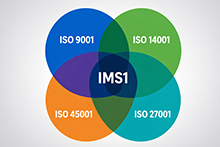
An integrated management system is a single set of documents, processes and registers that covers the requirements of every ISO standard the organisation follows, instead of running a separate system for each one.

Purchasing and supplier management is how the organisation controls the products, services and processes it buys in, so that the quality of what comes through the door matches what the organisation's customers expect coming out.
This section of the Knowledge Base covers management systems as a discipline - the operational arrangements that turn policy into consistent day-to-day practice. It is UK-focused but written to be useful to readers elsewhere who can apply the same principles under their own local legislation.
The articles cover the building blocks that any management system needs - document control, internal auditing, management review, risk management, supplier management, purchasing - regardless of whether the system is built around ISO 9001, ISO 14001, ISO 45001, ISO 27001 or any combination of them. Each article picks a specific topic, explains the principles, gives practical advice on what to put in place, and points to the alphaZ documents that support that part of the management system.
A management system is the documented arrangement of policies, processes, records and responsibilities an organisation uses to deliver its objectives consistently. It is not a separate thing the business does on top of operations - it is a structured description of how the business runs. The same management system supports day-to-day delivery, regulatory compliance, customer assurance and continuous improvement.
The advantage of running a single integrated management system rather than separate systems for quality, environment, safety and information security is consistency. One document register, one risk register, one set of internal audits, one management review cycle. The integrated approach removes the duplication that arises when each standard is implemented as a stand-alone project, and the workload of running the system reduces accordingly.
Most organisations find that the management system pays for itself in operational terms long before any certification benefit is considered. The structure forces the organisation to identify what actually matters, document the controls that keep it on track, and review whether the controls are working.
The mistake I see most often is treating the management system as a paperwork exercise that exists to satisfy auditors. The system is the operational arrangements of the business. If those arrangements are documented honestly and used in real life, the audit takes care of itself. If they only exist to be shown at audit, the audit will eventually catch up with that and the system has not actually done anything useful in between. Worse, the people running the business stop trusting the documented system because it does not match what they do, and the gap widens every year.
There is no single piece of UK legislation that requires an organisation to operate a formal management system. Legal obligations for record-keeping, risk assessment, competence and similar are spread across the regulations that govern specific activities - the Health and Safety at Work etc. Act 1974, the Data Protection Act 2018, sector regulations, employment law, environmental permitting. A well-run management system is the practical way to evidence compliance with all of these.
Customers and supply chains increasingly require management system certification as a contract condition. Public sector procurement, large private-sector buyers and many international supply chains expect ISO 9001 at a minimum, with ISO 14001, ISO 45001 and ISO 27001 increasingly appearing as additional requirements depending on the sector. The contractual requirement is often the trigger for adopting a management system rather than any single legal duty.
The major ISO management system standards share a common structure (the High Level Structure or Annex SL framework) which makes integration much easier than it used to be. Context, leadership, planning, support, operation, performance evaluation and improvement appear as the same top-level clauses across ISO 9001, ISO 14001, ISO 45001 and ISO 27001. The detailed requirements differ but the framework is consistent.
The articles in this section cover the building blocks that apply across all the standards - document control, internal audit, management review, risk management, supplier management, change control, corrective action. Specific articles on the standards themselves sit in our ISO Standards section.
For an integrated management system audit, I look first at the elements that span all the standards - document control, training records, internal audit programme, management review, supplier register, risk register. If those work coherently across quality, environment, safety and information security, the rest tends to follow. If each standard has its own version, the audit takes longer.
For organisations new to management systems, the practical starting point is to document what the business actually does today. The processes, the records, the responsibilities, the controls. The gap between that picture and what a chosen standard requires is the implementation plan. Organisations that already have a management system and are reviewing or extending it benefit from the same exercise - what does the system look like in reality, and where are the gaps between that and the documented intent.
The articles in this section walk through each of the management system building blocks, the controls that work in practice, and the alphaZ documents that support each one. A management system is more about consistency and discipline than about complex processes - the controls themselves are usually well-known; the value comes from applying them across the whole organisation without gaps.
The single biggest predictor of management system success is leadership commitment - actively reviewing performance and making decisions on what the system reveals.