


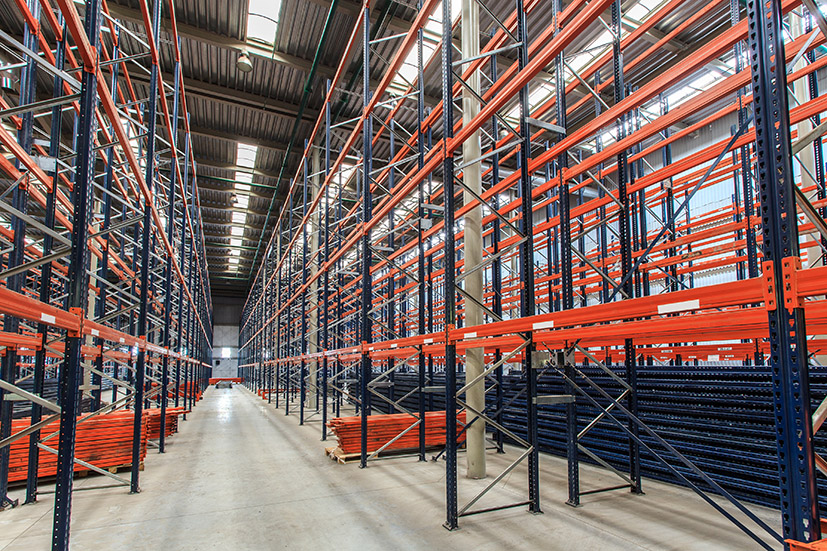
Warehouse Racking Safety, Inspection and SEMA Guidelines
Racking Safety in Brief
- Daily visual checks by warehouse staff for damage and overloading
- Annual expert inspection per SEMA / HSE guidance
- Defective racking taken out of service until repaired
Management of Racking
Industrial racking systems are widely used for storage in warehouses, distribution centres, manufacturing facilities and retail environments. When correctly installed and managed, racking is strong and reliable. When damaged, overloaded or poorly maintained, it presents a serious risk - partial or full racking collapse can cause fatalities, serious injuries, significant stock damage and production downtime.
Racking is work equipment under PUWER 1998, which means it must be suitable for its intended use, maintained in a safe condition, inspected at appropriate intervals and used correctly by trained people. The Work at Height Regulations 2005 are also relevant where work is carried out at height on or around racking - including loading operations using forklifts or other mechanical handling equipment.
Installation and Layout
The foundation of safe racking management is correct installation. Racking should be installed in accordance with the manufacturer's specifications and by a competent installer. Key considerations at the installation stage include:
The floor loading capacity must be adequate for the intended loads. Racking should not be installed on floors that cannot support the combined weight of the system and its maximum stored load. Traffic routes should be clearly defined and marked so that vehicle movements do not bring forklifts or other equipment into unplanned contact with racking uprights. Emergency escape routes must not be blocked. Maximum load notices should be fitted to each bay and clearly visible - stating the maximum bay load, beam load and unit load.
Racking should not be used as access equipment or climbing structure. Column guards and end-of-aisle protectors significantly reduce the risk of damage from forklift impact and are worth fitting as a standard measure.
Ongoing Inspection and Damage Reporting
Racking should be inspected regularly to identify damage before it creates a risk. A practical approach combines user awareness - anyone who notices damage reports it immediately - with structured periodic inspections carried out by a designated person.
A traffic light system is a widely used and effective method for classifying and communicating racking damage:
Green - safe for use, no identified damage or reduction in load capacity.
Amber - damage identified that requires action but is not severe enough to require immediate offloading. The rack should be isolated from further use until assessed and repaired or confirmed safe by a competent person.
Red - serious damage requiring immediate action. The rack must be offloaded immediately and isolated - cordoned off or physically blocked - until repair is completed and the rack is confirmed safe.
In addition to ongoing user-reported checks, a thorough inspection of all racking by a technically competent person should be carried out at least annually. The Storage Equipment Manufacturers Association (SEMA) operates an approved racking inspector scheme and inspections can be arranged through SEMA-approved inspectors.
Racking collapses are not rare events - they happen in warehouses across the UK every year, and when they do the consequences can be severe. Most collapses are preceded by damage that was visible but not acted upon. The inspection regime and the damage reporting system only work if people actually use them, and that requires a culture where reporting a damaged upright is seen as the right thing to do rather than something that will cause production delays. Making it easy to report and quick to act on is what makes the difference.
We do a weekly visual walk of all racking and log anything we find. We use the green-amber-red system and any amber or red items get actioned the same day. We also have an annual inspection from an external SEMA-approved inspector - it picks up things that are easy to miss day to day and gives us an independent record. The cost is minimal compared with the consequences of a collapse, and it demonstrates to insurers and auditors that the system is being managed properly.
Practical Compliance Guidance
Managing racking effectively requires a combination of correct installation, regular inspection, a clear damage reporting process and trained staff. Having a documented risk assessment in place to assess any risks posed by racking and controls that should be applied can be the first step towards safe management. Racking should also be inspected on an ongoing basis, which can be completed using a racking inspection checklist, where any defects, damage or potential signs of unsafe loads or anything concerning can be recorded and dealt with.
Section 3.2 of IMS1 covers equipment management and the arrangements for racking can be documented there. The documents below support a compliant approach.
The alphaZ document suite includes a racking inspection form and risk assessment to support ongoing management.
| alphaZ document | How to use it |
|---|---|
| ISO 9001/14001/45001 Management System Toolkit | The complete toolkit for implementing an ISO-compliant integrated management system. Includes the IMS1 manual, all policies, procedures, registers and audit checklists. |
| F-HS40 Racking Inspection Form | Use to record the results of periodic racking inspections - condition of uprights, beams, footplates and guards, load notices in place and overall assessment. Provides a documented inspection record. |
| RA-HS64 Racking Risk Assessment | Example risk assessment for racking use and storage operations. Adapt to reflect your specific racking layout, equipment types and working practices. |
| F-Q34 Equipment Visual Inspection Record | Use for routine visual checks of racking between formal inspections. Provides an ongoing record of condition monitoring. |
| ER4 Equipment Register | Use to log racking systems alongside other plant and equipment - recording installation details, inspection dates and any damage history. |
Note - all the above files can be downloaded with an alphaZ subscription.
Frequently Asked Questions
UK Legislation
The following UK legislation is directly relevant to the management of racking. Organisations outside the UK should identify the equivalent legislation applicable in their jurisdiction.
- Provision and Use of Work Equipment Regulations (PUWER) 1998
- Work at Height Regulations 2005
- Workplace (Health, Safety and Welfare) Regulations 1992
- Health and Safety at Work Act 1974
