


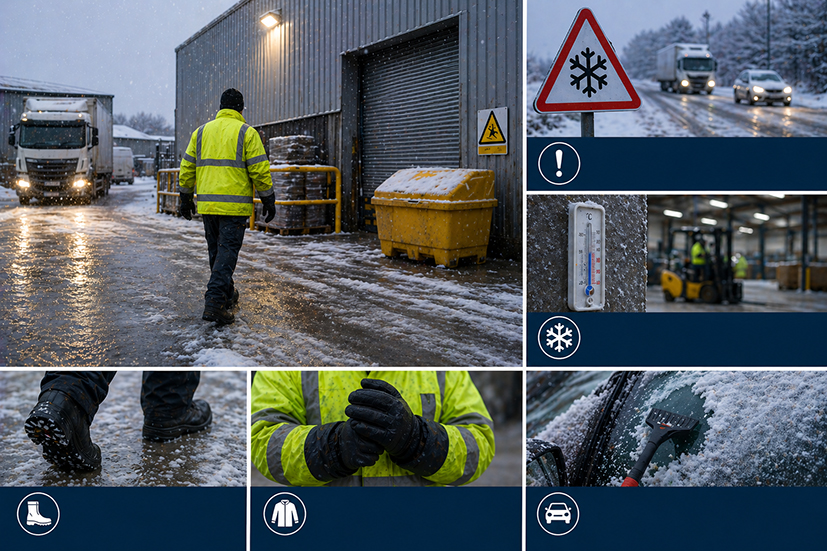
Winter Weather Workplace Risk Management and Cold Stress
Winter Risks in Brief
Cold, ice, low light and shorter days change the risk profile of outdoor work, driving and pedestrian routes. A short winter readiness plan covering gritting, PPE, lighting and lone worker checks gets most businesses through.
Managing Winter Risks at Work
Winter introduces a set of seasonal hazards that most risk assessments written in August do not properly cover. Slippery surfaces, reduced visibility, cold exposure, driving in poor conditions, frozen pipes, and the spread of seasonal viruses all become more likely between November and March. The work does not change, but the conditions the work is done in do, and the controls need to keep pace.
The practical question is not whether to rewrite every risk assessment each autumn - it is whether the controls you already have still work when it is dark at 4pm, the car park is icy, and half the team is off with flu.
Slips, Trips and Falls in Winter Conditions
Ice and black ice on paths, walkways, car parks and loading areas become a major cause of slip and fall injuries in winter. The controls are ordinary site management:
- Grit and salt stocks in place before the first cold snap, with responsibility for who lays it and when
- Priority routes identified - entrances, fire escape routes, paths to parking, walkways between buildings
- Early-morning inspection of external areas with gritting as needed before workers arrive
- Slip-resistant footwear for workers who spend time outdoors
- Clear signage for unavoidable wet or icy areas, and barriers where the hazard is serious
- Internal matting at entrances to deal with water and slush tracked inside
The supplies run out quickly when a cold snap arrives. Organisations that buy grit and de-icer in October tend to have some; organisations that try to buy it in January often find the local suppliers have sold out.
Driving in Winter Conditions
Winter driving is one of the most significant risks for organisations with field-based workers, drivers and site-visit staff. Shorter daylight, wet roads, ice, fog and snow all increase stopping distances and reduce reaction times. Vehicle pre-start checks become more important, and the standard emergency kit should be expanded for the season.
A winter vehicle kit typically includes an ice scraper and de-icer, a torch with spare batteries, warm clothing or a blanket, a high-visibility jacket, a shovel, and enough food and water for a driver stuck at the roadside. Mobile phone charging equipment is useful. For longer journeys in rural areas, snow chains or winter tyres may be appropriate.
Route planning matters in winter. Short days mean journeys that are comfortable in summer can end in the dark in December. Bad weather warnings should feed into decisions about whether journeys go ahead, and workers need to know they will be supported if they decide a journey is not safe.
Working Outdoors and Cold Exposure
Workers who spend significant time outdoors in cold weather need protection against the cold itself, not just against the associated slip and visibility hazards. Cold stress can develop gradually - reduced manual dexterity, slower reaction times, and hypothermia in extreme cases. Work in freezing conditions, wet conditions, or with wind chill all accelerate the effect.
Practical controls include suitable protective clothing, rotation out of the cold where possible, warm rest areas, access to hot drinks, and a buddy system or supervision so that someone notices if a worker is becoming affected. Pre-existing health conditions can increase susceptibility and may need individual consideration.
Premises and Business Continuity in Winter
Cold weather affects the premises as well as the people in them. Frozen pipes, leaking roofs, heating failures, and loss of power all become more likely. A practical winter checklist covers:
- Heating systems serviced before the cold arrives
- Pipework insulation checked in unheated areas
- Roof and guttering inspection before the first heavy rain or snow
- Back-up heating available in case the primary system fails
- Business continuity arrangements for loss of heat, loss of power, or inability of staff to get to work
- Remote working capability tested and ready
The business continuity angle matters. A day or two of disruption from weather is common; organisations with decent remote working arrangements handle it without much effect. Organisations that rely on everyone being physically present lose productive days every year and sometimes more than that.
Seasonal Illness and Absence
Flu, norovirus and the other respiratory viruses that circulate in winter affect attendance, productivity and in some cases the viability of particular roles for the duration of an outbreak. Basic controls - good ventilation, hand hygiene, sensible policies for staff who are unwell, and not insisting on presence when remote working is an option - reduce spread without needing anything exceptional.
Winter is also the time of year when single points of failure in a team become visible. Having two people who can do each critical task is the practical answer. Having only one becomes a problem every January.
The winter risk assessment update is one of those things that sits on the to-do list until it is too late. The organisations that get it right review in October - grit ordered, kit checked, staff briefed - and the ones that get it wrong are scrambling in late November when the first frost arrives.
Driving is the area where I see most harm. People drive in conditions they are not ready for, on tyres that were legal in July but marginal in January, with no thought to whether the journey is necessary.
A clear policy that supports drivers who call off a journey is worth more than any amount of winter driving training.
Winter risks are just the usual risks made worse. Slippery surfaces are more slippery, lighting is darker, driving is harder. You do not need a whole new management system for winter - you need the system you already have to notice that conditions have changed, and the people doing the work to have what they need to keep going.
We had a bad winter a few years back where three people went off in a week with flu and we had no cover for the shipping role. Cost us real money. Now we cross-train, everyone has a second role they can cover, and the site does not grind to a halt when someone is off.
The grit bins get refilled in October, the drivers get their winter kit check in November, and the heating gets serviced in September. That annual cycle is about as complicated as it needs to be.
Practical Compliance Guidance
Winter risk management sits within the general risk assessment and operational control arrangements in the IMS1 Manual. There is no separate "winter" section in most management systems - the existing risk assessments, driving arrangements, premises checks and business continuity plans should be reviewed annually to make sure they still work in winter conditions.
The alphaZ documents below cover the risk assessments, checklists and driving resources most relevant to winter. For each, the question is whether the controls described still work when conditions deteriorate.
| alphaZ document | How to use it |
|---|---|
| ISO 9001, 14001 and 45001 IMS Toolkit | Full integrated management system toolkit containing all the documents listed below alongside the wider management system templates. |
| RA-HS07 Office Environment Risk Assessment | Example risk assessment for office premises - useful as a starting point for reviewing whether the existing controls hold up in winter conditions. |
| F-HS9 Site Safety Daily Checks Form | Daily checklist which can be adapted to include winter-specific checks such as walkway gritting and external lighting. |
| Drivers Toolkit | Collection of driver-related documents including pre-start checks and defect reporting - relevant when adjusting driver equipment and routines for winter. |
| F-Q72 Home Working Checklist | Checklist for home-based workers, useful when expanding remote working as part of winter business continuity arrangements. |
Note - all the above files can be downloaded with an alphaZ subscription.
Frequently Asked Questions
UK Legislation
The following UK legislation is directly relevant to managing winter risks at work. Organisations outside the UK should identify the equivalent legislation applicable in their jurisdiction.
- Health and Safety at Work etc. Act 1974
- Management of Health and Safety at Work Regulations 1999
- Workplace (Health, Safety and Welfare) Regulations 1992
